Showing posts with label Dr. Blumenstock. Show all posts

Friday, October 17, 2014

Why It's Harder To Sleep As We Get Older


She makes it look so easy.

Sleeping helps us process memories, learn new skills, and stabilize our mood. Yet as we get older, a good night's sleep becomes a rare commodity. 
Scientists have struggled for years to find out what makes sleep more elusive as we age. As it turns out, there are a number of factors that change how — and when — we sleep, from shifts in brain activity to a loss of special brain cells that tell us when it's time to rest. And not getting enough shuteye, no matter our age, can have dangerous repercussions.
Here's what happens to our bedtimes as we age.


Goodbye, Deep Sleep

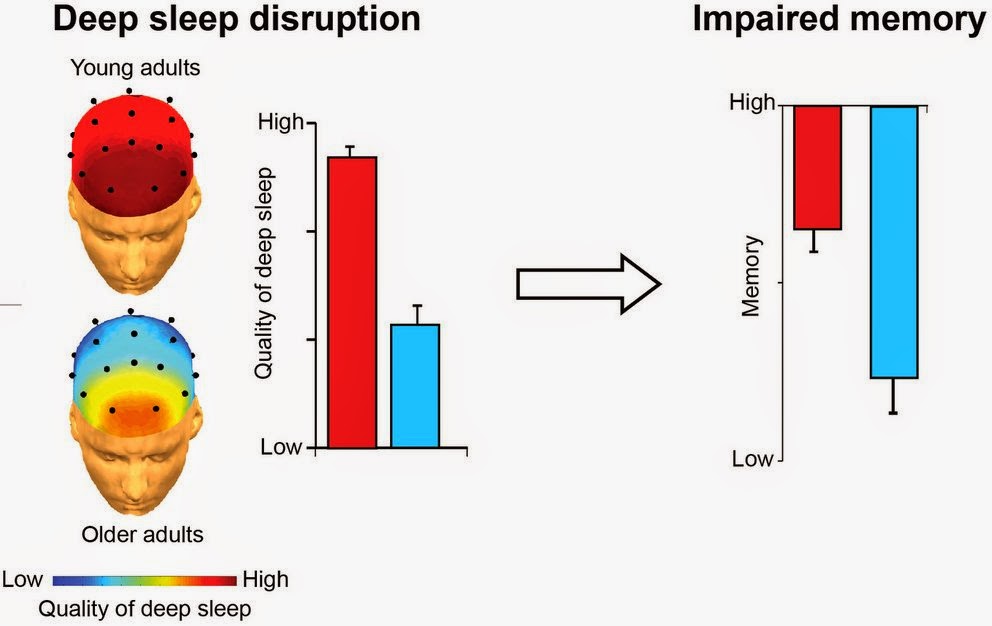
As we get older, we tend to get slightly less sleep, and the quality of that sleep is poorer, with more awakenings throughout the night. Our brains also spend fewer hours in deep sleep mode, that precious time when the frantic chaos of brain activity grinds to a slow burn. During deep sleep, or slow wave sleep, our brain waves stretch out and get less frenetic.
A typical 25-year-old plunges half a dozen times into several hours of sustained deep sleep throughout the night. In contrast, the average 70-year-old brain shuffles quickly in and out of moderate-level sleep, spending only a few minutes in the deepest phase of rest and far more time in shallow sleep or complete wakefulness. The transition between being asleep and awake also becomes far more abrupt as we age. This is probably why older people are generally more likely to call themselves "light sleepers."
Unfortunately, our changing sleep patterns have some pretty stark effects on our health and cognitive functioning.
For starters, not getting enough deep sleep messes with our memory. When we hit deep sleep, our slowed-down brain waves help transfer short-term memories stored in the hippocampus to our prefrontal cortex, where they are recorded as long-term memories. But when we don't spend much time in deep sleep, a recent study study suggests, our newest memories can get stuck in the hippocampus, where they are soon overwritten with new memories.

Hello, Afternoon Nap

In the 1990s, scientists identified a tiny section of the brain that acts as an on/off switch for sleep in mice. Earlier this year, the same team of researchers discovered that humans have a sleep section of the brain, too, and that as we age, we lose the special type of brain cells that live there.
After making this initial discovery, the researchers took a look at the data from a long-term sleep study of more than 1,000 people who joined at age 65 and agreed to be monitored until their deaths. The scientists found that people who lost a larger number of these brain cells had more fragmented sleep patterns — they woke up more and slept for shorter periods. The relationship between the cells and sleep patterns was surprisingly precise: The fewer cells someone had, the more disrupted her sleep. The more disrupted someone's sleep, the worse their memory. 

Our answer to our broken-up cycle of unsatisfying sleep? Naps.
Typically, naps still don't allow us to reach deep sleep, but they do help make up for the decreases in alertness and increases in stress that can result from too little shuteye.

A Lifelong Trend

You might not remember it, but your parents sure do: From the moment they brought you home from the hospital as a newborn, you never slept for more than a few hours at a time.
Yet even after managing to wake them up throughout the night, your infant self clocked in up to 20 hours of sleep each day. By the time you celebrated your fourth birthday, you cut back your daily shuteye to 12 hours, and as a teenager, you slept a conservative 9 hours each night.
In keeping with this gradual trend, the average 35-year-old gets about 8 hours of shut-eye each night. By the time we hit 70, most of us need only about 7 hours. Older people also get far less REM sleep.
The difference between a 70-year-old's sleep schedule and a 35-year-old's, however, is that older people rarely get all that sleep in one solid block, leaving them groggier after waking. Hence the afternoon nap.


Lost Sleep Is Not Always Due To Age

In the elderly, difficulty sleeping could also be a side effect of other problems like muscle spasms, depression, anxiety, and respiratory disorders like sleep apnea, which becomes more common as we age. 
These are often treatable conditions that can go undiagnosed when people assume sleeping problems are simply a natural byproduct of old age. Other chronic conditions, such as arthritis, can disrupt sleep, so it's important to make sure these issues are not simply dismissed as run-of-the-mill insomnia.


Thursday, June 12, 2014

Driver Charged in Crash Involving Tracy Morgan Had Not Slept in 24 Hours, Prosecutors Say


The Walmart driver whose truck collided with a van carrying the comedian Tracy Morgan and other performers had not slept for more than 24 hours before the crash, New Jersey prosecutors said on Monday.

Prosecutors in Middlesex County charged the truck driver, Kevin Roper, 35, of Jonesboro, Ga., on Saturday with one count of death by auto and several counts of assault by auto in connection with the pileup early that day on the northbound New Jersey Turnpike in Cranbury Township, about 45 miles from New York City. One comedian, James McNair, known as Jimmy Mack, was killed, and Mr. Morgan was critically injured.

In a criminal complaint released on Monday, prosecutors said that at the time of the crash, Mr. Roper had been operating the tractor-trailer “without having slept for a period in excess of 24 hours resulting in a motor vehicle accident.” In a statement issued on Monday, a Walmart spokeswoman, Brooke Buchanan, emphasized that the company believed Mr. Roper “was operating within the federal hours of service regulations,” which limit work shifts to 14 hours, with only 11 of those behind the wheel. She said the company was cooperating with the investigation.


Tracy Morgan, 45, a former cast member of “Saturday Night Live” and “30 Rock,” sustained serious injuries, including a broken leg, a broken femur, a broken nose and several broken ribs, his publicist said Sunday.   Credit Slaven Vlasic/Getty Images


Under New Jersey law, a driver can be convicted of vehicular homicide if it is shown that he had been without sleep for at least 24 hours when the accident occurred.
A preliminary police investigation found that Mr. Roper had failed to perceive slow-moving traffic ahead of him, and, at the last minute, swerved in an attempt to avoid a collision. The complaint did not explain how the New Jersey State Police determined that Mr. Roper had been sleep deprived.

The crash occurred as Mr. Morgan, 45, a former cast member of “Saturday Night Live” and “30 Rock,” was traveling to New York City from a comedy show in Delaware. Around 1 a.m., a Walmart tractor-trailer collided with the back of the van, a 2012 Mercedes-Benz Sprinter, setting off a chain reaction that involved four other vehicles.

Mr. Morgan sustained injuries including a broken leg, a broken nose and several broken ribs. After the crash, he and his assistant, Jeff Millea, 36, were airlifted to Robert Wood Johnson University Hospital in New Brunswick, N.J. Another comedian, Ardie Fuqua, 43, was also injured.

By Monday, Mr. Morgan was responsive but remained in critical but stable condition. “This recovery will be arduous,” his publicist, Lewis Kay, said in a statement.


The truck driver, Kevin Roper, 35, was charged with one count of death by auto and several counts of assault by auto in connection with the accident on Saturday.CreditNew Jersey State Police, via Associated Press Photo


The National Transportation Safety Board said Monday that it had sent a team of investigators to New Jersey to focus on the larger issue of the safety of commercial truck operators. The board noted that the number of fatal large truck crashes has steadily risen.In 2012, there were about 333,000 large truck crashes, which resulted in 3,921 deaths and more than 104,000 injuries. Of those killed, about 73 percent were occupants of vehicles other than the large truck.

“The upward trend in crashes, fatalities and injuries involving large trucks is a cause for concern,” said the statement, prepared by Don Karol, director of the board’s Office of Highway Safety.

“Too often, responses to our recommendations have been slow or, in some cases, nonexistent,” the statement said. “It should not take additional crashes and loss of life to inspire change.”

Mr. Roper’s next appearance in Middlesex County Superior Court in New Jersey is scheduled Wednesday. He was released Saturday after posting $50,000 bail.


Thursday, May 8, 2014

Scientists solver snoring using 3D printing

Notes from Dr. Norman Blumenstock

This oral device is not made in the USA as of yet nor have they applied for FDA approval. The Narval from Res-Med is a 3D printing appliance that I provide as one of many options.


Scientists solver snoring using 3D printingThe revolutionary 3D printing is now being used by scientists to create mouthpieces made of titanium which will assist snorers to breather much easily when they sleep. People who snore suffer from obstructive sleep apnoea which leads to disrupted sleep.

These mouthpieces work by diverting air around the teeth to the windpipe which is where it is actually required and then bypassing the obstructive mouth tissue which can cause blocking of normal breathing during sleep.


CSIRO's John Barnes says that these can be made especially effective since 3D printing allows to create custom fitted mouthpieces for every patient.

He says that all humans have different faces with different sizes and shapes of jaw. He agrees that it is indeed a revolution that they can now make customised mouthpieces which are any day more effective than any earlier device or therapy.

He says that the patient just needs to bite into it and it fits accurately. These titanium mouthpieces made using 3D printing are coated in medical-grade plastic which looks like a large mouthguards with a small spout which looks like a duckbill which pokes through the lips.


Monday, March 3, 2014

Snoring and Sleep

Notes from Dr. Norman Blumenstock:
Find out about the symptoms and solutions of snoring.  Learn how proper treatment and decision can help you on National Sleep Foundation.

Snoring is noisy breathing during sleep. It is a common problem among all ages and both genders, and it affects approximately 90 million American adults — 37 million on a regular basis. Snoring may occur nightly or intermittently. Persons most at risk are males and those who are overweight, but snoring is a problem of both genders, although it is possible that women do not present with this complaint as frequently as men. Snoring usually becomes more serious as people age. It can cause disruptions to your own sleep and your bed-partner's sleep. It can lead to fragmented and un-refreshing sleep which translates into poor daytime function (tiredness and sleepiness). The two most common adverse health effects that are believed to be casually linked to snoring are daytime dysfunction and heart disease . About one-half of people who snore loudly have obstructive sleep apnea .
While you sleep, the muscles of your throat relax, your tongue falls backward, and your throat becomes narrow and "floppy." As you breathe, the walls of the throat begin to vibrate - generally when you breathe in, but also, to a lesser extent, when you breathe out. These vibrations lead to the characteristic sound of snoring. The narrower your airway becomes, the greater the vibration and the louder your snoring. Sometimes the walls of the throat collapse completely so that it is completely occluded, creating a condition called apnea (cessation of breathing). This is a serious condition which requires medical attention.
There are several factors which facilitate snoring. First, the normal aging process leads to the relaxation of the throat muscles, thus resulting in snoring. Anatomical abnormalities of the nose and throat, such as enlarged tonsils or adenoids, nasal polyps, or deviated nasal septum cause exaggerated narrowing of the throat during sleep and thus lead to snoring. Functional abnormalities (e.g. inflammation of the nose and/or throat as may occur during respiratory infection or during allergy season) will result in snoring. Sleep position, such as sleeping on your back, may lead to snoring in some people. Alcohol is a potent muscle relaxant and its ingestion in the evening will cause snoring. Muscle relaxants taken in the evening may lead to or worsen snoring in some individuals. One of the most important risk factors is obesity, and in particular having a lot of fatty tissue around the neck.

SYMPTOMS:

People who snore make a vibrating, rattling, noisy sound while breathing during sleep. It may be a symptom of sleep apnea. Consult your doctor if you snore and have any of the following symptoms or signs:
  • Excessive daytime sleepiness
  • Morning headaches
  • Recent weight gain
  • Awakening in the morning not feeling rested
  • Awaking at night feeling confused
  • Change in your level of attention, concentration, or memory
  • Observed pauses in breathing during sleep


TREATMENT:

Snorers are generally unaware of their snoring, and must rely on the observations of their bed-partners. Some snorers may wake up at night choking and gasping for breath, but this occurs relatively infrequently. If you have been told that your snoring is disturbing to others, or you have some of the symptoms and signs listed above, consult your doctor. He or she will take your history, perform a physical exam and will determine whether you require a consultation with a sleep specialist and a sleep test to determine if you have sleep apnea and to see how your snoring affects your sleep quality.
Depending on the results of the sleep study, you will be presented with a series of options to treat snoring. These will generally include:
  1. lifestyle modification (i.e. avoidance of risk factors mentioned above, sleep position training if applicable, treatment of allergies if applicable, etc…);
  2. surgery (generally on the back of the throat and roof of the mouth, or the nose if applicable, using a variety of instruments including scalpel, laser, or microwaves);
  3. appliances (mainly oral appliances constructed by a dentist experienced in treatment of snoring and sleep apnea, but also other appliances such as nasal dilators); 
  4. and sometimes CPAP (a continuous positive airway pressure appliance which blows room air into the back of the throat thus preventing it from collapse).
The latter method is the treatment of choice for sleep apnea. If you are diagnosed with this condition, it is imperative that you pursue treatment aggressively; untreated sleep apnea will lead to daytime dysfunction and puts you at a higher risk for vascular disease.
Your own doctor, or sleep specialist, will talk to you in detail about each of the above treatment approaches, their chances of success, possible complications, and costs. They will be able to advise you which of the above treatment approaches is the correct one for you.

COPING:

People who suffer mild or occasional snoring, who wake up feeling refreshed, and function well during the day may first try the following behavioral remedies, before consulting their doctor:
  • Lose weight
  • Avoid tranquilizers, sleeping pills, and antihistamines before bedtime
  • Avoid alcohol for at least four hours and heavy meals or snacks for three hours before retiring
  • Establish regular sleeping patterns
  • Sleep on your side rather than your back

POLL DATA:

The National Sleep Foundation's 2002 Sleep in America Poll revealed that 37% of adults report they had snored at least a few nights a week during the previous year. In fact, 27% said that they snore every night or almost every night. Males were more likely than females to report snoring at least a few nights a week (42% vs. 31%).
NSF's 2003 poll, which focused on older adults between the ages of 55-84, reveals that about one-third of older adults overall (32%) report they had snored at least a few nights a week in the past year, with about four in ten 55-64 year olds (41%) most likely to have said they snore compared to about one-fourth of 65-74 year olds (28%) and 75-84 year olds (22%). Men were significantly more likely than women to report snoring at least a few nights a week (40% vs. 26%).
Reviewed by Victor Hoffstein, M.D.

Thursday, February 20, 2014

Dreaming of Sleep: Silencing snoring for restful nights.

Notes from Dr. Norman Blumenstock:
This a decent article about snoring. Unfortunately it doesn't mention it's connection to obstructive sleep apnea.

POSTED BY LOUISE PYPER / FEBRUARY 19, 2014 /

As children we all used to tease our parents and grandparents for snoring. It is not just the ‘old folk’ who snores, some of us can start snoring in our late teens and early twenties.

Snoring usually happens when something is partially obstructing your airways. The sound comes from you throat where air flows pass relaxed tissue and as you breathe the tissue starts for vibrate, causing the snoring sound. Snoring is not particularly dangerous, but can be depending on how your parter might ‘deal’ with the constant snoring.

There are different grades of snoring:
  • Grade one – snoring is almost harmless, where snoring is infrequent and the sound is not very loud.
  • Grade two – snoring is when a person snores on a regular basis (more than 3 times per week). They might also have mild breathing issues during sleep making them feel tired and sleepy the next day.
  • Grade three – snoring is when a person snores very loudly each and every night. People suffering from Grade Three snoring may have obstructive sleep apnoea, which can lead to the airways being completely obstructed for up to 10 seconds. This can cause an individual to wake from a deep sleep during the night making them feel extremely tired the next day. This may effect your day-to-day life as you might experience poor memory, poor concentration, headaches, anxiety, depression, irritability and a short temper.
If you think you or your partner might be suffering from snoring you should try these methods:
  1. Sleep on your side – lying on your back or stomach can be stressful on your neck.
  2. Lose weight – excess body weight especially around the neck puts pressure on your airway.
  3. Stay away from alcohol and sleeping pills – both of them can depress your central nervous system and relax the muscles in your throat.
  4. Sort out your allergies – when your nose is partially blocked you will automatically start breathing through your mouth.
  5. Get a mouthguard – to keep your teeth together when sleeping.
  6. Stop smoking – as it damages your respiratory system.
  7. Elevate your upper body – by raising the head of the bed or propping up your upper body to decrease the stress on your neck
  8. Ozone therapy – might also improve your snoring and sleeping habits as Ozone Therapy increases oxygen levels in the blood, improves blood circulation, balances the body’s metabolism, relieves stress and anxiety and improves sleep. Ozone Therapy also combats allergy causing substances and will improve your overall health.
It is very important to keep a regular sleep schedule, by going to bed at a set time and waking up at a set time. This way you can insure you are getting your 7-8 hours of sleep. If you are pregnant and you start snoring all of a sudden it is best to go see your GP. It is no surprise that pregnant women start to snore as they have gained some extra body weight. When you snore your baby might get deprived of oxygen especially if you are a Grade Three snorer.

Snoring is not the end of the world. Try these steps and if none had worked visit your GP as something sinister might be going on.

Are you the culprit or the victim?

Monday, February 10, 2014

What Is It About Sleep Apnea That Seems To Predict Heart Risks?

Notes from Dr. Norman Blumenstock
This is a serious issue.

Posted: Updated: 
MORE:

Friday, February 7, 2014

Snore Sensing Pillow Automatically Nudges You To Roll Over

Notes from Dr. Norman Blumenstock
Too much nudging can make you exhausted in the morning.


Andrew Liszewski, Gawker Media
Feb 5, 2014, 08.10 PM IST

It seems like snoring has become more of an epidemic than any of us have realized. At CES,Sleep Number revealed its IQ bed that lets bedmates silence a snoring partner. But now there's a pillow that can stop a deafening snorer all by itself.
Using a built-in microphone with adjustable sensitivity, the pillow listens for loud or soft snorers and then automatically inflates an internal air bladder which increases the pillow's height by up to three inches. This in turn has the effect of gently waking the snorer so they roll over or simply move their head to clear their airways.
Snore Sensing Pillow Automatically Nudges You To Roll Over
When activated just as you're ready to call it a night, the pillow has a 30-minute grace period giving you enough time to fall asleep without the bladder inflating. At $150 it's not cheap, it can't be flipped, and it has to be plugged in all night long. So if you're always on the hunt for the cool side of the pillow, this isn't for you. Unless your bedmate who hasn't slept for the past three or four days strongly insists. [Hammacher Schlemmer]


Monday, February 3, 2014

Snoring alone: Sleep apnea, restless legs syndrome can make it hard for significant others to share same bed

CASSELTON, N.D. – Linda Wendel discovered distance was the key to dealing with her husband’s loud snoring.

By: Ryan Johnson, INFORUM

CASSELTON, N.D. – Linda Wendel discovered distance was the key to dealing with her husband’s loud snoring.

Dan Wendel snored even when they married eight years ago, she said. But when it got worse, and the self-described light sleeper couldn’t get the rest she needed, she used a move to a new house in Lisbon, N.D., years ago as a chance to do something about it.

“I told him, ‘You can just sleep in the basement. I don’t need this,’ ” she said.

The couple slept alone, Dan in the basement and Linda in an upstairs bedroom. Despite her complaints, nothing changed.

“There was just no way that you could sleep in the same room as him,” she said.

But that changed about five years ago, a combination of several things that Linda Wendel said were finally enough to get her husband to take it seriously and schedule an appointment that would diagnose him with obstructive sleep apnea.

“It was night and day,” she said about the change she witnessed in Dan, thanks to the help of a continuous positive air pressure (CPAP) machine after diagnosis.

Shaun Christenson, a neurologist and sleep disorder specialist at Essentia Health in Fargo, said cases like the Wendels’ are fairly common – and often only come to the attention of medical professionals after tough love from the bed partners who lose sleep to their loved one’s snoring, obstructive sleep apnea, nighttime kicking and nudging caused by restless legs syndrome or other sleep disorders.
“It’s their partner that’s telling them to go see the doctor, because the snoring is so loud and disturbing they’ll say they’ve got to see a doctor and there’s something wrong,” he said.

LOSING SLEEP

More than half of middle-age and older adults snore, and many of those suffer from obstructive sleep apnea, according to Dr. Samy Karaz, a physician and medical director of Sanford Health’s Sleep Medicine Center in Fargo.

Men are the most frequent offenders, he said, though women tend to catch up after menopause because higher testosterone levels can result in more accumulation of fat and muscles in the neck, crowding the throat and putting extra pressure on the soft throat muscles.

But while related, sleep apnea is much more than the loud snoring that can be one of the most obvious symptoms.

Karaz said when people are awake, their throat muscles are always stretched open, which opens the airway – and keeps our daytime breathing quiet. But once we fall asleep, these muscles start to relax, narrowing the airway and causing snoring.

Apnea takes it one step further, closing the throat entirely during sleep – which is why sufferers will actually stop breathing for short periods of time, then usually snort or gasp for air.

The noise can be enough of a hassle for bed partners, Karaz said. But they also face high anxiety, he said, with some worrying their loved one won’t start breathing again unless they nudge them awake.
“Many of them really worry that the person who has the pausing might die, or wonder will he die if he quits breathing,” he said.

Though it’s “extremely rare” for someone to die from sleep apnea, he said it can lead to medical woes for those who suffer from it. If left untreated, it shortens a sufferer’s lifespan by an average of five years and drastically increases the risk of hypertension, diabetes, heart attack, stroke, depression and obesity – and being overweight can make it worse, expanding the fat cells in the neck and further narrowing the airway.

“It becomes a vicious cycle,” he said. “They have apnea, they sleep poorly, they eat more, they get more obese, and they have more apnea.”

The apnea sufferer may not realize it, but their condition also makes it nearly impossible to get quality sleep – no matter how many hours they spend in bed each night.

A healthy person will spend 95 percent or more of their sleep in the deeper sleep stages to get proper rest, Karaz said. But apnea sufferers’ brains have to wake up from sleep tens, or even hundreds, of times each hour to open up the throat, meaning they rarely get deep sleep.

“It’s like a diver being pulled out of the water repeatedly, so they never have a chance to reach deep sleep and stay in deep sleep,” he said.

Many will end up with chronic daytime sleepiness, struggling to stay awake when they sit down and finding it hard to focus at work, he said – though many don’t realize what they’re missing out on because they’re so used to their condition.

PILLOW TALK

Dan Wendel had several warning signs, including waking up with a sore throat every morning and finding it difficult to get the energy to help his wife with their young kids or household chores. He was groggy at work, but said he figured he was just like everyone else.

The issue came to a boiling point about five years ago, when he went to a fishing tournament with relatives and shared a cabin for the overnight trip.

“That night, I kept up the entire cabin,” he said.

Dan Wendel’s uncle confronted him the next day, saying he was the loudest snorer he’d ever heard, and suggested he should go to a doctor.

That experience, along with his wife’s urging and suspicion that his symptoms could be caused by depression, finally got him to go for help – reluctantly.

“I thought I’d do it just to get people off my back,” he said.

With the referral of his primary-care physician, Wendel spent a night at Sanford’s sleep clinic, and specialists hooked him up to a CPAP machine to see if it would help.

“I woke up from my test, and I remembered the dream that I had just sleeping in the center,” he said. “I hadn’t dreamt and remembered a dream in three or four years.”

Now, Dan Wendel is a faithful user of the CPAP machine that uses a continuous stream of low air pressure to keep the airway open, helping him get good sleep – and putting an end to his snoring that had kept him apart from his wife at night.

“You didn’t get the pillow talk at night and stuff like that,” he said. “But every night now before we go to bed, we always talk through our days and talk about whatever happened. That’s kind of nice.”

Linda Wendel said she had learned to deal with the snoring before, but she appreciates having her husband alert and energetic again because he’s now able to help her with chores, caring for their three children or even just stay awake on long drives.

“It’s just nice to not have him basically only physically present,” she said. “Even though he was sitting there in a chair, to me it didn’t count when he wasn’t interacting.”

When sleep apnea, restless legs syndrome, sleepwalking or other nighttime conditions prevent a bed partner from getting their sleep, too, Christenson said it can lead to frustration, anxiety and even embarrassment if the couple has to sleep in separate beds.

But rather than ignoring the warning signs and letting things get to a breaking point after years of restless nights, he said people should listen to their loved one’s concerns and consider talking with their physician to see if they could benefit from treatment.

“If it is to the point where your significant other or spouse is kicking you out of the bed, that means it’s a pretty significant problem,” he said.

Readers can reach Forum reporter Ryan Johnson at (701) 241-5587

Wednesday, January 22, 2014

Blood Pressure Rose in Kids with Sleep Apnea

Notes from Dr. Norman Blumenstock


We generally think about high blood pressure and adult obstructive sleep apnea.

January 16, 2014 / Author:  / Reviewed by: Joseph V. Madia, MD Beth Bolt, RPh

(dailyRx News) In adults, sleep apnea is tied to higher blood pressure. Does sleep apnea produce the same result in children?

In a recent study, researchers found that more severe sleep apnea among children was tied to higher blood pressure after four years. Both overweight and normal weight children were at risk.

The authors of this study suggested that sleep apnea is a key factor in regulating blood pressure in children.
"Get proper treatment for your child's sleep apnea."


Albert Li, MD, of the Department of Pediatrics at the Prince of Wales and Shatin Hospital, led this study on childhood sleep apnea.

Sleep apnea occurs when there are pauses or gaps in breathing during sleep.

According to Dr. Li and colleagues, research has linked sleep apnea in adults to higher blood pressure. This study investigated whether the same relationship exists for children who have sleep apnea.

High blood pressure during childhood increases the risk of high blood pressure during adulthood, metabolism problems and other heart health issues, according to these researchers.

A total of 185 children with sleep apnea were recruited for this study. Data was collected at a four-year follow-up visit, during which their blood pressure was measured for 24 hours.

The researchers also measured the children's height, weight, sleep habits and daytime sleepiness.

These researchers analyzed the data from the 58 overweight participants and the 127 normal weight participants separately.

The group of normal weight children had not experienced significant changes in BMI or sleep apnea severity over the previous four years.

The overweight participants had significant reductions in BMI but no significant changes in sleep apnea severity.

The researchers found that, for both groups, a higher sleep apnea severity at the beginning of the study was linked with higher blood pressure at the four-year follow-up.

For the group of overweight participants, changes in sleep apnea severity were also tied to changes in blood pressure scores across the four-year period.

According to the authors of this study, sleep apnea remains an important factor in regulating blood pressure, regardless of one's body weight or BMI. They concluded that sleep apnea severity may be a driving factor of high blood pressure in young people.

These researchers acknowledged some limitations to the study, like the modest rate of follow-up and only one night of observing sleep patterns.

The study was published in Chest on January 2.
The researchers did not disclose any funding information or conflicts of interest.


Tuesday, January 21, 2014

The Cure For Snoring Is...Singing?

Notes from Dr. Norman Blumenstock


The results, published in the International Journal of Otolaryngology and Head & Neck Surgery, revealed that snoring was "on average reduced, especially in subjects who performed the exercises accurately and consistently." Moreover, those who experienced the most significant improvement started snoring only in middle age, weren't overweight and didn't have any pre-existing nasal problems.

Choir director Alise Ojay's vocal exercises have been shown to work throat muscles that help silence the snorer within


snoring man
Alise Ojay claims that a series of routine vocalizations, performed 20 minutes a day over the course of less than a month, can reduce snoring significantly.(Courtesy of Flickr user Nicky Wilkes)

Up until a few years ago, Alise Ojay had a persistent problem with her spouse. Many couples can relate. Her husband, Frank, was a chronic snorer. But she invented a fix, and eventually persuaded Frank to try it out. As reluctant as he was, it was worth a shot, especially considering that a well-known scientist, after testing it, had already given it a thumbs up.
While there are a number of sophisticated medical treatments available, such as nasal and oral devices as well as surgery, Ojay's solution is more akin to a natural home remedy. The British choir director claims that a series of routine vocalizations, performed 20 minutes a day over the course of less than a month, can reduce snoring significantly. That's because these "singing exercises," she says, were formulated specifically to work out throat muscles that have weakened over time. The approach is based on the premise that firming up these muscles would allow air to pass in and out with less obstruction.
“Singing for Snorers,” a 42 pound ($70) CD of guided vocal gymnastics, was developed though clinical trials and extensive research that identified particular sounds (like "ung" and "gah," for instance), and in some cases pitch changes, that would strengthen parts of the throat most implicated in snoring. In the 10 years since her product has been on the market, users have reported that it has helped them snore less and breathe quieter. One reviewer who purchased the CD on Amazon.com even said that undergoing the program enabled him to bring his sleep apnea, a more serious sleep disorder involving sudden interrupted breathing, under control.
Ojay came up with the idea back in 1997, when a friend shared that his snoring was so severe that it led ultimately to the breakup of his last relationship. After listening in on his snoring, she suspected that his soft palate (a swath of controlled tissue located near the back of the mouth) was very lax, to the point where it produced loud acoustic vibrations with each breath. She then wondered if making sounds that toned up his palate would allow it to better resist the force of the air that funneled through each time he breathed in.
Her line of thinking is, at the very least, scientifically sound. Various factors—including obesity, alcohol consumption and certain sleeping positions—contribute to noisy breathing during sleep. Excessive fatty tissue around the neck, for instance, can make for particularly loud breathing patterns. But the primary mechanism responsible for most snoring is the relaxation of throat muscles, which progressively worsens as we age. Alcohol and other muscle relaxants also momentarily affect these areas.
To test out her hunch, Ojay enlisted the help of Edzard Ernst, a professor of complementary medicine at the nearby University of Exeter, who had previously ran experiments using electrodes to stimulate soft palates. Together they designed and conducted a study involving 20 subjects committed to following a 3-month-long daily regimen of vocal exercises that Ojay compiled based on her own self-experimentation. The duration and volume of the participants' snoring was monitored and recorded by a voice-activated tape recorder for seven nights prior to and after the treatment to assess its effectiveness.
“I spent months experimenting with a mirror and my own throat, even though I knew which muscles I wanted to work," Ojay says. “It was just a case of finding the exact sounds and pitch changes that grabbed and maximized the movement in those muscles.”
The results, published in the International Journal of Otolaryngology and Head & Neck Surgery, revealed that snoring was "on average reduced, especially in subjects who performed the exercises accurately and consistently." Moreover, those who experienced the most significant improvement started snoring only in middle age, weren't overweight and didn't have any pre-existing nasal problems.
While she has received positive feedback from customers who are moderately overweight, Ojay cautions that the program won't work for everyone. "The people most likely to get an excellent result are those who have started snoring as they get older," she says. "As we all discover, any area of our bodies we don’t exercise becomes lax, and our throats are no exception."
A recent review by the U.K.'s public health agency, the National Health Service, concluded that although the findings are promising, additional studies using better monitoring apparatuses would be needed to further establish this effect. At the moment, clinical phase trials are being planned at Kingman Medical Center in Arizona and another at Emory University in Atlanta. Both are designed to measure the impact of targeted singing exercises on patients with mild to moderate sleep apnea.
For now, Ojay says she hopes to eventually expand her sole product with a graduate version for those who may want to ratchet their routine up a notch. "It’s not a quick fix, you need to stick at it and ultimately keep it going at a maintenance level," she adds. "But the benefit, besides reducing snoring, is that it's good for your singing voice and helps raise everyone’s spirits—especially the person sleeping next to you."


Read more: http://www.smithsonianmag.com/innovation/cure-snoring-singing-180949408/#ixzz2r3IAgk1q 
Give the gift of Smithsonian magazine for only $12!: http://bit.ly/1cGUiGv 
Follow us: @SmithsonianMag on Twitter

Tuesday, March 29, 2011

Real Solutions for Sleep Apnea

Our goal at the Central Jersey Dental Sleep Medicine is to help sleep disorder sufferers find REAL solutions to their sleep problems. No one wants to live with never getting a full night's rest, and we would like to help you sleep better. There are many solutions to sleep apnea, but the first step is to get diagnosed. If you visit us then you will receive an objective medical assessment by a team of physicians, neurologists, pulmonologists, and ear, nose, and throat specialists.

Following their referral, Dr Blumenstock will examine you and discuss all options to solve your sleep apnea. One common solution is an oral appliance, but often changes in behavior will also affect your sleep apnea. Get diagnosed and treated with a real solution for your sleep apnea.

Read more on Dentist Norman Blumenstock

Monday, December 20, 2010

The Central Jersey Dental Sleep Medicine Mission

Central Jersey Dental Sleep Medicine is dedicated to helping those who suffer from sleeping disorders. We understand that sleep is very important to one's overall mental and physical health, and we strive to make sure that every patient will have restful sleep.

Our mission at the Central Jersey Dental Sleep Medicine is to help sleep disorder sufferers find REAL solutions to their sleep problems. Oral therapies and simple appliances can make a huge difference in your life. We encourage you to read through the vast amount of information available on our website, ask questions, and maybe do a little bit of research on your own. You will find that a good night's sleep is completely within your reach with the help of professionals from Central Jersey Dental Sleep Medicine.

Read more on Dr. Norman Blumenstock and Central Jersey Dental Sleep Medicine.